Is the NHS really broken?
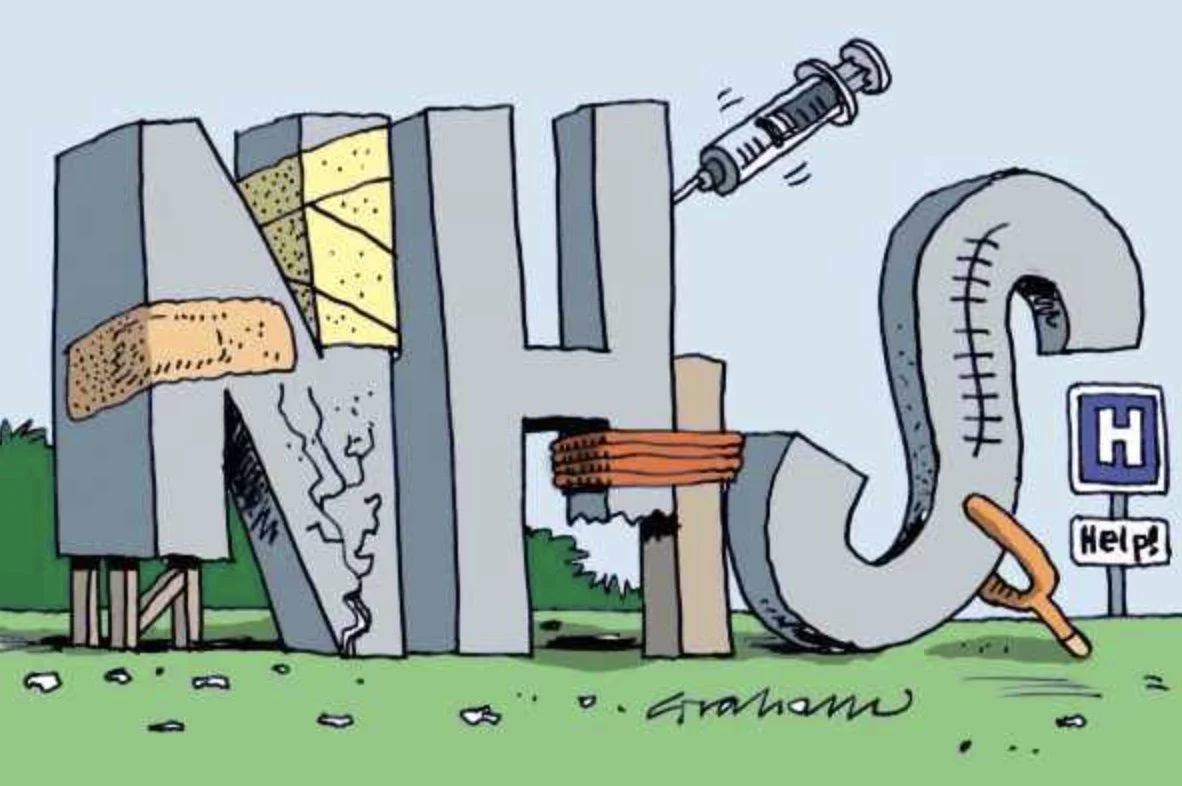
Wes Streeting’s first pronouncement when he became Health Secretary was that the NHS was “broken”. Recently Nigel Farage has started to announce that the UK as a whole is “broken’. But what do politicians mean by “broken”, and is it true?
A dictionary definition of broken would be something like “damaged, no longer able to work” or “not functioning properly,” as well as “destroyed or ended.” Interestingly the word broken can also mean “promises have not been kept”. The latter should give pause for thought those politicians who seem to like using the word. They need to understand that “broken” encompasses both our broken systems and their broken promises.
Is the NHS broken?
It is official Government policy that “the NHS is broken” but what does it really mean? The Government is using the word to mean “not functioning properly, damaged, or failing in a fundamental way,” rather than “destroyed or ended”.
It is clear that the NHS is failing to deliver in many areas - long waits for ambulances, difficulty seeing a GP, onerous waiting lists for elective surgery, poor cancer outcomes, and patients on corridors in A&E. But at the same time there are countless examples of excellent care being provided by staff who are committed to their patients and to maintaining their high professional standards.
Is it helpful to say the NHS is broken?
Most staff within the NHS do not see it as broken; they recognise is as being under extreme strain or in crisis. Describing the NHS as broken is a good soundbite and politically signals urgency. It seeks to justify major reform, perhaps in ways that would previously have seemed unconscionable.
However, the term ‘broken NHS’ erodes public and staff trust, suggesting that it is beyond repair. Politicians need to understand that ‘broken’ suggests to the public that the NHS cannot be restored. Some Politicians believe this to be true but the majority of the public value the NHS and wish to see it succeed and flourish.
The term ‘broken’ includes both broken systems and broken promises. It is important to consider both definitions in the context of today’s NHS.
A broken system: staff experience
Staff live and work inside this apparently broken system every day, providing care to the best of their abilities. In contrast, broken promises pass down from political and managerial commitments to the service which, when they are not kept, create the impression of a broken system. Most staff have little knowledge of, or involvement in, these high level plans and strategies.
Working inside the NHS the failure of plans, strategies and promises means that you cannot deliver the standard of care you were trained for, no matter how hard you work. You arrive on shift to unsafe staffing, full wards, patients in corridors, poor and unreliable IT, and elective care which has descended into an endless process of fire‑fighting. There is no continuity, and you find yourself apologising for poor care and inevitable delays. Public support, at an all-time high during Covid, is now at an all-time low. Clinically, the brokenness manifests in 12‑hour waits in A&E, and waiting lists so long that the planned procedure may become inappropriate or unuseful by the time the patient is at the top of the waiting list.
Staff suffer moral injury as they experience an accumulation of avoidable harm. Professionally it feels like you are striving against a permanent headwind; rota gaps are standard, rest breaks become a luxury, and managers constantly expect you to ‘do more with less’ when you are already at or over the edge. Over time, this erodes trust in the NHS and eventually in yourself, leading to burnout and to staff leaving the service altogether, which feeds further into the pressures.
Broken promises: inputs and politics
Broken promises reside in political manifestos, government plans and NHS strategies. Staff are constantly hearing that waiting times will be reduced, that the NHS is receiving record investment, that a long‑term workforce plan will fix shortages, and that bullying and whistleblowing will be addressed. In contrast on the ground, they see vacancies unfilled, capital bids rejected, offices refurbished while clinical areas crumble, and speaking up still punished both directly and indirectly.
You hear commitments to “shift care into the community,” “parity of esteem” for mental health, “zero tolerance” for racism, and “flexible careers” for staff with caring responsibilities. Yet despite these promises, Community Nursing numbers fall, Mental Health beds are shut without real alternatives, discriminatory behaviour is tolerated, whistleblowers are persecuted and flexible working is framed as “lack of commitment.” Each and every gap between words and deeds is experienced by staff as yet another small betrayal.
Broken promises lead to a broken system
The connection is obvious but rarely acknowledged; when promises about funding, workforce, capital, social care and culture are broken, the payment is made in staff time, morale, and poorer patient outcomes. If politicians promise shorter waits without funding extra capacity, you end up working harder in a system that still cannot meet demand, and you carry the anger of patients whose expectations were raised. If leaders promise “zero tolerance” for bullying but protect senior perpetrators, you learn that psychological safety is conditional, and that silence is safer than speaking up.
Similarly, promises about “wellbeing offers” and “resilience” can ring hollow when basic conditions such as safe staffing, reliable IT and manageable workloads are not met. Staff made to attend ‘mindfulness sessions’ during work time then stay on after hours, without pay, to complete the clinical work they have missed. The message received is that your distress is an individual coping problem, not the predictable result of structural choices. The worst clinician is one who is seen to be ‘unable to cope’.
Over years, this accumulation of broken promises hardens into the sense that the system itself is broken.
What this feels like for staff
For many clinicians, the deepest injury is not the workload but the dissonance between the story and the reality. You hear leaders celebrating “record numbers of staff” while you cannot fill a rota; “historic investment” while your department relies on charitable funds for basics; “learning culture” while colleagues who raise concerns are isolated. The public are told the service is safe and improving; you go home knowing you are providing levels of care that would once so low as to have been unthinkable.
This gap between rhetoric and reality causes cynicism; this leads to numbness, and in some cases to exit. Some staff leave entirely; others stay but withdraw emotionally, just ‘going through the motions’. A few keep challenging, often at great personal cost. For those who remain committed, the work becomes a matter of managing what you can still control for the patient in front of you and ignoring the hollow and unfulfilled promises from above.
So what do we do about it?
First we need to recognise where responsibility for the current state of the NHS belongs. The NHS is not broken because of the lack of professionalism of its staff but because, over many years, political and organisational promises about resourcing, design, funding and culture were made and not kept. Naming those promises clearly, including what was said, what was funded, and what actually happened, shifts the narrative from individual resilience to systemic accountability.
I know that NHS staff reading his piece want to provide excellent standards of care to patients. This is difficult when having to deal simultaneously with the consequences of decades of broken promises and the crippling effect this has had on patient care. There are many examples where, despite difficulties, staff demonstrate green shoots of integrity, and continue to provide excellent care. Staff must understand that the state of the NHS is not their fault, and they must understand how to protect their own values and professionalism. This will be through setting boundaries, by peer support, or through coaching while continuing to care for their patients. This process does not deepen despair, but legitimises what staff feel and understand in the choices they can make.
If you work in the NHS, and this article speaks to your own experience, the choice may seem to be between somehow keeping going or walking away. If you are struggling with the balance between promises and reality in the NHS, if you feel unsupported, undervalued, and marginalised, or if you are worn down by broken promises, please seek help from an Executive Coach. Coaching will help you navigate thought these difficult times.
You can book a free no obligation 30 minute on-line Coffee Break call with me here. If I am not the right Coach for you, I will recommend somebody else who might be.
Please check my website and sign up to my mailing list if you want to receive more posts like this directly to your inbox.